














Strach Film & Nylon Vazin
$0.00- Wide and ordinary nylon
- Nylon shearing
- Stretch pallet
- Bubble wrap
- Cellphone and opp and cpp
- Nylex and Nylon Store
- Strach Film

Stretch Film & Nylon Keyhan
$0.00- Food Packaging Stretch Film
- Forage Stretch Film (Nylon Forage Packaging)
- Stretch pallet film
- Nylon Soil Disinfectant
- Nylon Silo
- Forage Stretch Film (Nylon Forage Packaging)
- Greenhouse Nylon
- Nylon Shrink

Sulfonic Acid
$0.00LABSA 96-97% ( Sulfonic Acid ) is the largest-volume synthetic surfactant because of its relatively low cost, good performance, the fact that it can be dried to a stable powder and the biodegradable environmental friendliness as it has straight chain. LABSA 96% is an anionic surfactant with molecules characterized by a hydrophobic and a hydrophilic group.
- HS code: 34021130
- Chemical formula: R-C6H4-SO3H / C6H5CnH2n+1
- Classification: anionic surfactant

Sulfur
$0.00The Greeks called it “theion”, the Romans “Sulfur” and the Anglo-Saxons “brimstone” – regardless of its name one thing is certain, Sulfur is vital for life. Sulfur (also spelled Sulphur) is a chemical element with symbol S and atomic number 16.
SULFUR GRANULES – SULPHUR LUMPS
$0.00Sulfur is one of the most important agricultural and industrial raw materials and is considered a strategic product sulfur is an odourless, tasteless and polyvalent nonmetal which is mostly in the form of yellow crystals and is obtained from sulphide and sulphate. Sulphur occurs naturally in the environment and is the thirteenth most abundant element in the earth’s crust. It can be mined in its elemental form, although this method has declined over the last decade to less than 2% of world production. Today most elemental sulphur is obtained as a co-product recovered from oil and gas production in sweetening process.

Sulfur-Commercial Sulfur
$0.00Sulfur is a chemical element with the symbol S and atomic number 16. It is abundant, multivalent and nonmetallic. Under normal conditions, sulfur atoms form cyclic octatomic molecules with a chemical formula S8. Elemental sulfur is a bright yellow, crystalline solid at room temperature.
Sulfur-Commercial Sulfur
$0.00Sulfur is a chemical element with the symbol S and atomic number 16. It is abundant, multivalent and nonmetallic. Under normal conditions, sulfur atoms form cyclic octatomic molecules with a chemical formula S8. Elemental sulfur is a bright yellow, crystalline solid at room temperature.
Sulphur(170 000 mt/year)- Sulphur
$0.00Sulfur is one of the most important agricultural and industrial raw materials and is considered a strategic product sulfur is an odourless, tasteless and polyvalent nonmetal which is mostly in the form of yellow crystals and is obtained from sulphide and sulphate. Sulphur occurs naturally in the environment and is the thirteenth most abundant element in the earth’s crust. It can be mined in its elemental form, although this method has declined over the last decade to less than 2% of world production. Today most elemental sulphur is obtained as a co-product recovered from oil and gas production in sweetening process.

Toluene
$0.00| Model : | |
|
Description : |
Application: chemical industry,TDI,TNT, adhesives & paints solvent |
| Company name : |
Persian Gulf Petrochemical Industries Co |
| Packaging : | |
|
Minimum order : |
1 |
| Standard : | |
| Production power : |
Toluene
$0.00Model : Toluene
Description :
Application: chemical industry,TDI,TNT, adhesives & paints solvent
Company name : Persian Gulf Petrochemical Industries Co
Packaging :
Minimum order : 1
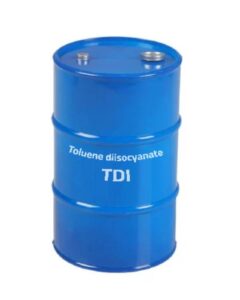
Toluene diisocyanate (TDI)
Toluene diisocyanate (TDI) is an organic compound with the formula CH 3 C 6 H 3 (NCO) 2. Two of the six possible isomers are commercially important.
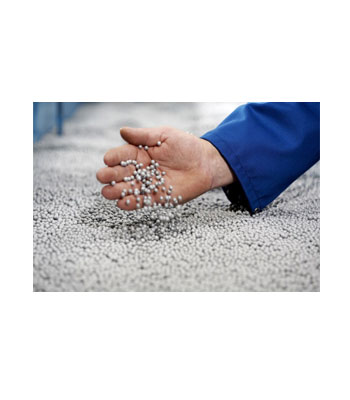
TPE Compound Plastic Materials
$0.00TPE is a polymer blend or compound whose high melting temperature allows its thermo-plastic feature to be formable and designed at a temperature range of 0 C with elastomeric behavior. This process is reversible and its product can be processed or molded or extruded. The hardness (shore) of TPE materials ranges from 0A to 70D.
